
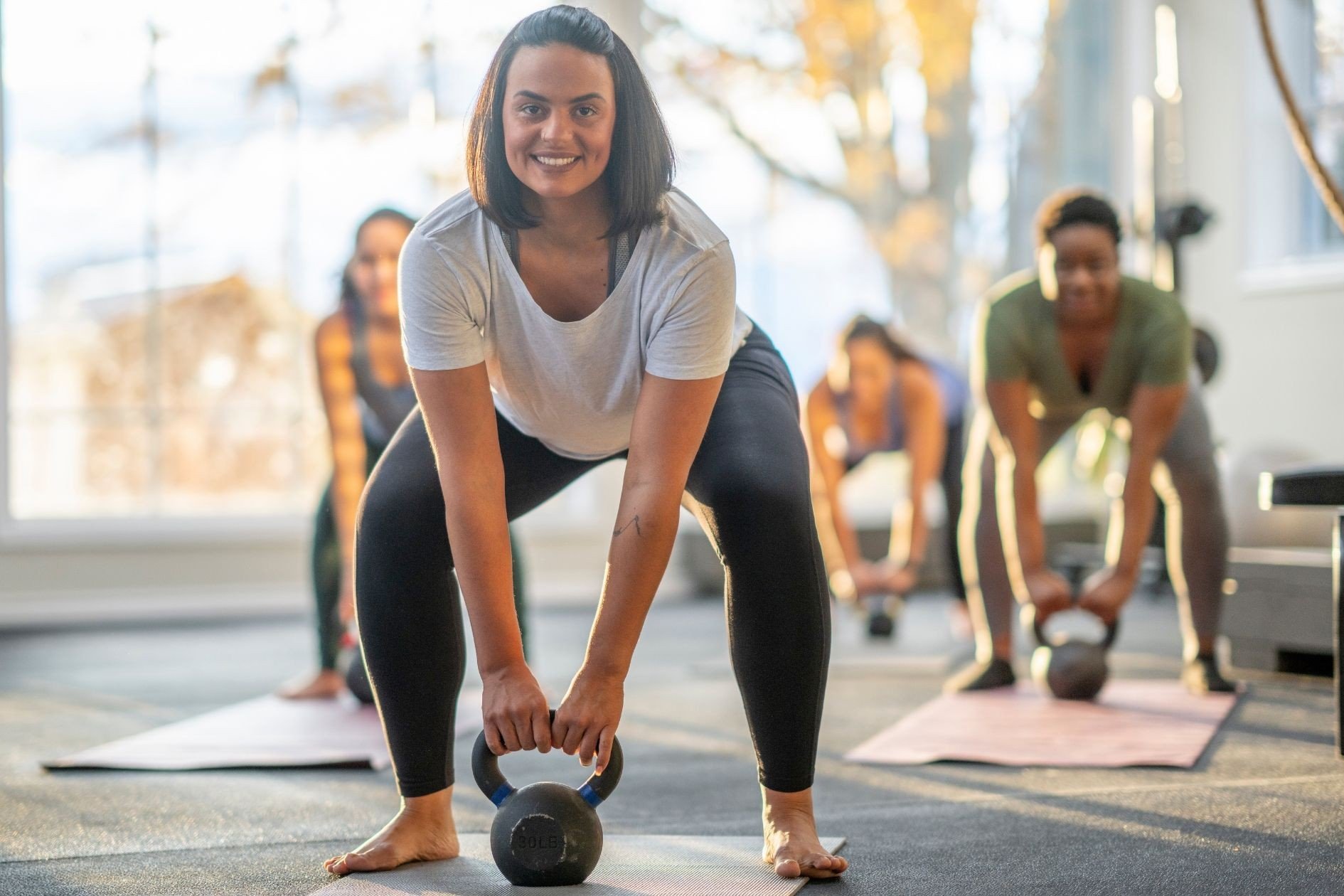
Forget training for your beach body. What about your old lady body? Building muscle isn't just about looking strong. It's about supporting your bones, metabolism, blood sugar and future health, especially after having kids and during hormonal changes.
NOVEMBER 12, 2026
There was a quote circulating around IG that said something to the effect of:
"Forget beach body, I'm training for my old lady body."
(I know I messed that up and I'm far too lazy to go search for it. You get the idea.)
I gotta tell you, I don't think I could be any more obsessed with this idea.
Particularly for moms.
Here's why:
As we get older, we tend to lose muscle, especially if we're not doing anything to maintain it.
Babymaking can make this even harder.
Nearly every mom I work with has struggled to maintain or rebuild muscle during pregnancy and postpartum. The exceptions tend to be moms who are eating a heaping amount of protein and lifting weights consistently during and after pregnancy.
This is amazing, when appropriate for their pregnancy and recovery, and I recommend it. But I don't see it happen a lot.
So a huge number of moms come out of pregnancy and postpartum needing to rebuild strength and muscle. Rinse and repeat if you have multiple kids.
Why does this matter?
Well, muscle mass is a BFD.
And it's a kind of "use it or you lose it" situation.
Here's why you want to pay attention to your strength and lean body mass (another way of talking about muscle) for your right-now body, and for your 30-years-from-now body.
Strength training helps keep your bones strong
The stronger your muscles, the better you can support your bones.
When you lift weights, your muscles pull on your bones and place them under load. That mechanical stress helps stimulate your bones to maintain and build strength.
This is one reason resistance training is so important for bone health as we age.
Postpartum bone changes are a thing, too.
During breastfeeding, women can temporarily lose bone density. The good news is that this typically recovers after weaning.
And yes, we want to make sure we're getting in all the calcium and vitamin D we need, but strength training is another key part of supporting strong bones.
No matter how old your kiddos are, this is important.
When estrogen drops, particularly during menopause, we also become more vulnerable to bone loss.
Building a strong base of muscle and continuing to challenge those muscles is something that's in our control to help protect our bones.
Building muscle supports blood sugar control
Your muscle is metabolically active, and it gobbles up glucose.
This is good.
When your muscles contract during exercise, they can take up glucose through pathways that don't require the usual insulin signal. Regular exercise also helps improve insulin sensitivity over time.
As muscle mass and physical activity decrease with age, blood sugar regulation can become more difficult.
The opposite of good insulin sensitivity is insulin resistance.
And insulin resistance can contribute to higher risks of metabolic syndrome, type 2 diabetes, and difficulty managing blood sugar. It's also particularly relevant for women dealing with PCOS.
Know what else can affect insulin sensitivity?
That drop in estrogen I just talked about.
This is one of the reasons eating enough protein and lifting weights become especially important during perimenopause and menopause.
We're not trying to stop hormonal changes from happening.
We're trying to support your body through them.
Muscle mass matters for your metabolism
Know what can really mess with your metabolism?
Decades of diet culture pressure to undereat, yo-yo dieting, and restrictive diets.
When you're repeatedly losing weight and gaining it back, you can lose muscle along the way.
And losing muscle can contribute to a lower metabolic rate.
Prolonged, significant calorie restriction can also trigger changes in energy expenditure and thyroid-related hormones as your body adapts to having less fuel.
Know what makes all that worse?
The impact it can have on your muscle mass.
If you have a history of losing weight, putting it back on, losing it again, it's worth looking at how much muscle you may have lost over this process.
Your metabolism might be crying for help.
This is why eating more when you're under-fueled and strength training are foundational elements of my work with weight management clients.
We're not just trying to make the number on the scale smaller.
We want to support your metabolism, preserve your muscle, and help you actually feel good in your body.
Read Next:
Why weight loss feels so hard after kids (it's not just calories)
Strength training helps support your joints
Strength training has been researched in people with arthritis and found to help reduce pain and stiffness while improving strength and physical function.
While I haven't seen the same level of research specifically on postpartum joint pain and the joint issues that can come along with perimenopause hormonal changes, I've seen improvement in these symptoms with my patients who lift weights.
Building strength around a joint can improve its support and function.
And that matters whether you're picking up a 25-pound toddler for the thousandth time today or trying to keep your knees happy when you're 75.
Of course, if you're dealing with ongoing joint pain, we also want to understand what's causing it instead of assuming that more squats are automatically the answer.
Strength training improves balance and stability as you age
We've all heard the stories or seen our own mothers or grandmothers take falls that can lead to breaks.
Depending on the age when you fall, this can be a turning point for health and longevity.
Not only does maintaining muscle help support your bones, but having stronger muscles can keep you more stable and protect you against falling in the first place.
Strength, balance, and the ability to move around confidently are a pretty big deal as we get older.
And I'd personally like to be able to get up off the floor without making 47 different noises when I'm 80.
Want more like this?
Subscribe to my newsletter for weekly(ish) postpartum hormone and nutrition tips
Why strength training matters during postpartum and perimenopause
Ok those are just SOME of the reasons why focusing on weight training and plentiful protein intake is not only helpful as we age, but helpful right now, especially in the face of hormonal changes.
This isn't just something you want to think about after you retire.
Keeping those muscles strong and active can give you right-now benefits, as well as help reduce health risks in the long run.
And if you've spent years focusing on getting smaller, eating less, or burning more calories?
Maybe it's time to shift that goal toward getting stronger.
Your old lady body will thank you.
Go do some squats!
(And if you're pregnant or newly postpartum, make sure your strength routine fits your individual health and recovery.)
Want to feel better in your right-now body?
If you're:
Not feeling fully recovered after having kids
Struggling with weight changes, low energy, or hormonal drama
Wondering whether you're eating enough to support your metabolism
Tired of trying random diets and hoping something finally works
This is where personalized support matters.
Mother Reboot is for moms who have tried all the things but still don't feel like themselves.
When we work together, we look at your symptoms, nutrition, health history, and functional labs to figure out what needs attention first.
Then we build a plan around what your body actually needs, instead of throwing another restrictive diet at the problem.
No guessing.
No starving yourself into a smaller body.
Just a more thoughtful approach to feeling better now and taking care of your future self.
👉 Learn more about Mother Reboot here.
xo
Alison
Want the good stuff?
sign up to get weekly postpartum and hormone tips via email.